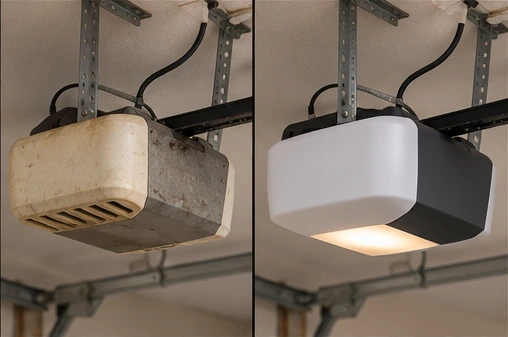
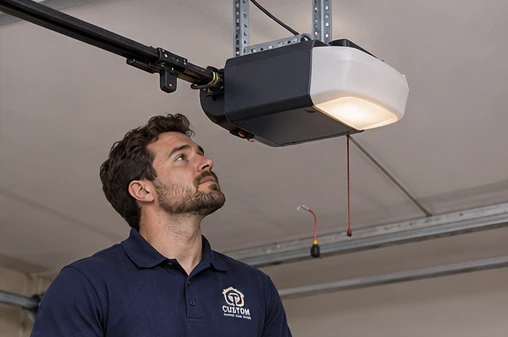
Separate control symptoms from door movement
Notice whether the wall control and remote behave differently. A single remote that stops working presents a different starting point from a system that ignores every control. If the motor runs, describe whether the door moves, hesitates, or remains still. Do not repeat the operation merely to collect more examples if movement looks strained.
A search for garage door repair near me often starts with the opener because it is the most visible moving device. However, a heavy door, damaged roller, or track obstruction can affect powered operation even when the opener is responding correctly.
Photoelectric sensors and the closing path
Many residential openers use photoelectric sensors near the bottom of the opening to monitor the closing path. Stored items, dirt on a lens, or a bumped sensor can interfere with that path. With the door stationary, you can look for an obvious object between the sensors without touching electrical connections or moving brackets.
Do not bypass a sensor or hold controls as a workaround for an unresolved safety problem. Indicator lights can mean different things across opener models. Record the observed light pattern and model information, if safely accessible, instead of assuming every blinking light has the same explanation.
Settings should follow a mechanical assessment
Travel and force settings influence powered movement, but changing them is not a sound first response to binding or unexpected reversal. Mechanical resistance should be understood before an adjustment is used to change how the opener reacts. Otherwise, a setting may conceal the symptom while the cause remains.
When choosing a garage door repair service near me, ask how the evaluation distinguishes the opener from the door hardware. A clear explanation should connect the reported behavior to the relevant controls, drive components, safety devices, or movement problem rather than treating every reversal as a setting issue.
Information that narrows an opener concern
An opener's model label, the type of control affected, and the sequence of lights or sounds can help guide a discussion. Note any recent power interruption and whether other garage electrical devices appear to have power. Limit observations to accessible areas; do not open an electrical enclosure or reach near a drive mechanism.
For garage door repair in Burbank, IL, describe both the command and the result: for example, the wall button starts the motor but the door stays closed. That sequence is more useful than simply saying the opener is broken, and it avoids assuming a particular component has failed.
Repair questions for an existing opener
Ask which part or function is implicated, whether compatible repair components can be identified, and whether the door itself moves as it should. The condition and configuration of the existing equipment matter when discussing repair options. No conclusion about a particular unit can be drawn from brand name alone.
Explain any accessories involved, such as a keypad or connected control, but keep the main symptom clear. A communication problem with one accessory is different from a mechanical drive problem. Write down any changes you made before the issue appeared so the evaluation can consider them.
Use the system only when its behavior is understood
After repair, ask how the opener's travel and safety functions were checked and what homeowner checks the model's instructions describe. Keep people, pets, and objects out of the opening during operation. A working remote does not establish that every safety function is operating properly, so mention concerns about reversal or inconsistent closing specifically.
Call Custom Garage Door Repair at (708) 627-9744, or email [email protected]. Hours are daily, 8am–8pm. Discuss the current condition of the door and confirm service arrangements by phone rather than assuming a message establishes a visit.
Questions homeowners ask
Why does the door reverse before it closes?
Possible causes include an obstructed sensor path, mechanical resistance, or an opener setting issue. Stop repeated attempts and describe where reversal happens so the cause can be assessed.
What if the remote fails but the wall button works?
The difference may point toward the remote or its communication with the opener. Check the model instructions for basic battery guidance, and report whether other remotes behave the same way.
Should I increase opener force when the door struggles?
No. Struggling can indicate a door balance or movement problem. Increasing force before assessing the cause can place more demand on the system and mask the original symptom.
Can I disengage the opener to test the door?
Do not disengage a door that is open, uneven, or suspected of having a spring or cable problem. The door may move unexpectedly when the opener connection is released.
What information should I have ready?
Share the opener model if safely visible, which controls work, any indicator pattern, and the door position. Describe sounds and movement without operating the system repeatedly to recreate the fault.